Jump to8 sections
Which AI platforms sell ads, how can you buy them and which new capabilities are genuinely available?
ChatGPT, Google AI Mode and Microsoft Copilot now show ads in or around AI-generated answers. Yet you cannot simply open a campaign on every platform. Advertising on AI platforms may require a new ad account, may run through existing Search campaigns or may not be available at all.
An ad below a ChatGPT answer works differently from a search ad in Google AI Mode. Visibility inside an answer is not automatically paid reach either. This overview shows what is available as of 12 October 2026.
Advertising on AI platforms: the market at a glance
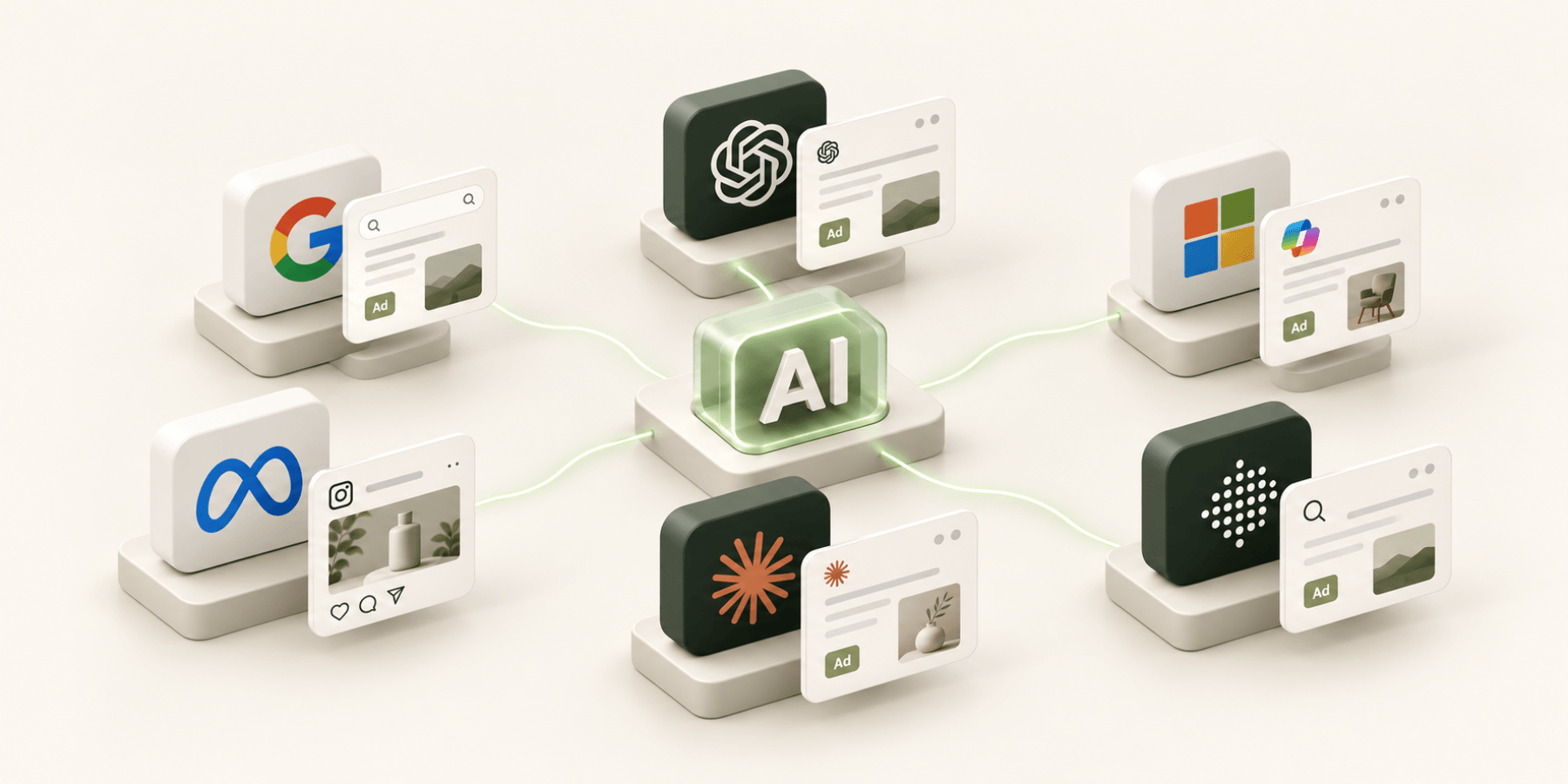
ChatGPT is building its own advertising platform. Google and Microsoft are adding AI environments to existing advertising networks. Perplexity and Claude rely on subscriptions and organic answers.
- ChatGPT: self-service Ads Manager is available in the Netherlands.
- Google AI Mode and Gemini: reach is provided through Google Ads, particularly AI Max and Performance Max.
- Microsoft Copilot: ads run through Microsoft Advertising and its existing Search and Shopping infrastructure.
- Meta AI: there is no separate buying platform for ads inside Meta AI; Meta mainly applies AI within Ads Manager and personalisation across Facebook and Instagram.
- Perplexity: its earlier advertising experiment has ended.
- Claude: Anthropic has explicitly chosen to keep its assistant ad-free.
ChatGPT Ads: a standalone advertising platform
OpenAI started testing ads in the United States in February 2026. Self-service Ads Manager is now also available to advertisers based in the Netherlands. Ads can appear for users of ChatGPT’s free plans. Paid consumer subscriptions and business environments remain ad-free.
Campaigns are created directly in ChatGPT Ads Manager. Advertisers can optimise for reach, clicks or conversions and buy valid impressions or clicks. At ad-group level, context hints describe the subjects, conversations or situations in which an offer may be relevant. They are not traditional exact-match keywords and do not guarantee delivery.
The ad remains separate from the answer and is clearly labelled. Selection can consider the conversation, landing page, ad copy and supplied context. The environment is particularly relevant when people compare, plan or research a decision.
The latest development arrived on 5 October 2026. OpenAI announced visual ads that will initially be tested during image generation. It is also expanding measurement with additional attribution partners, Conversions API integrations and incrementality experiments.
Strong copy alone is insufficient. A suitable landing page, clear context signals and dependable conversion data help the system understand relevance. Read more about advertising in ChatGPT.
Google AI Mode: advertising through Google Ads
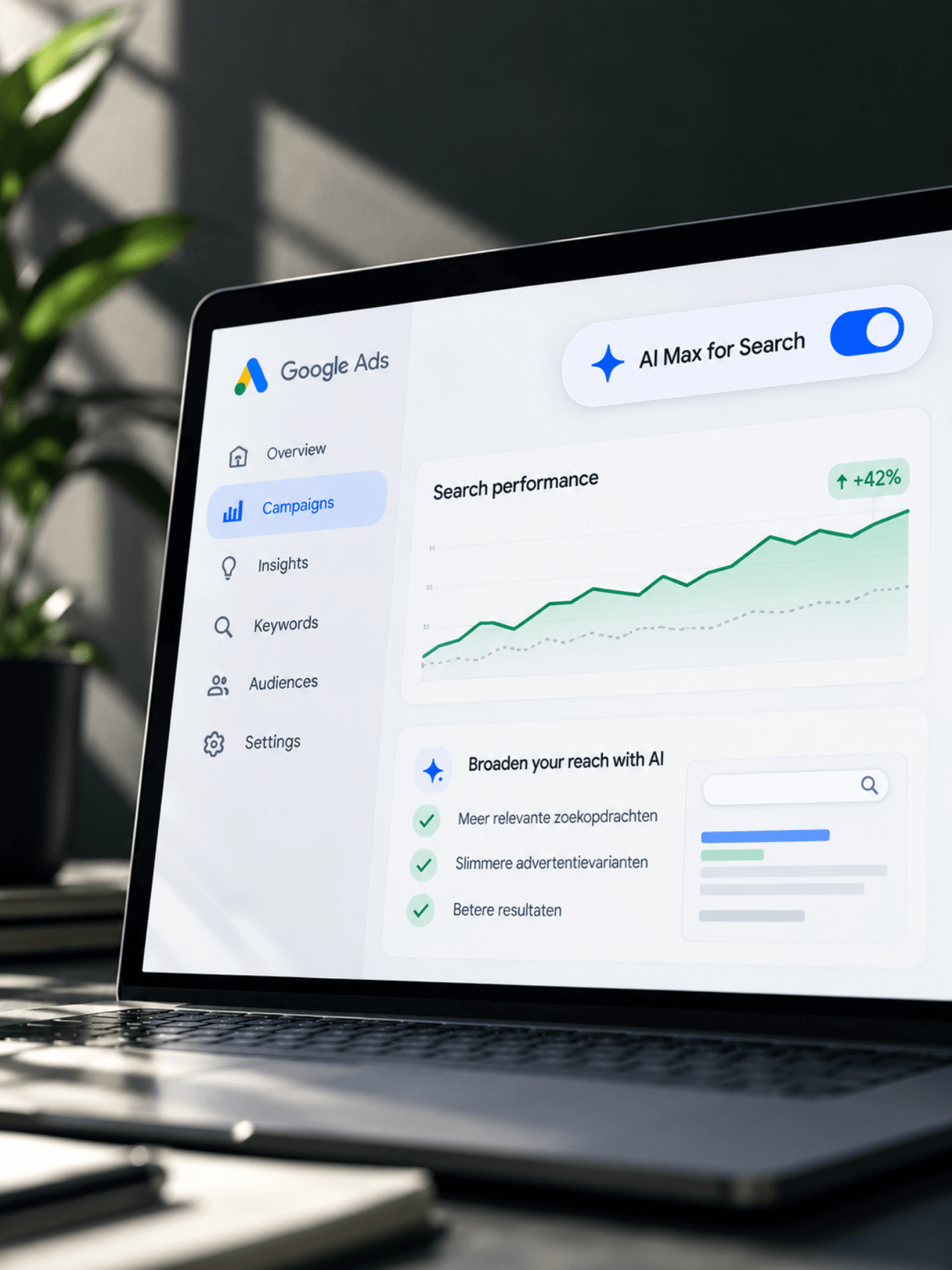
There is no separate advertising account for Google AI Mode or Gemini. Google uses existing campaigns and product data to show ads across its AI search experiences. AI Max for Search and Performance Max are therefore the main routes for becoming eligible for these placements.
Google is testing several Gemini-powered formats. Conversational Discovery Ads help people discover options during an exploratory conversation. Highlighted Answers explain a relevant part of an offer. AI Shopping ads combine product information with guidance tailored to the question. For eligible retailers, Google is also developing native checkout through the Universal Commerce Protocol.
Landing pages need complete information, Merchant Center feeds need current attributes and conversion tracking must be reliable. AI Max can interpret intent more broadly, adapt text and select a destination. Controls for brands, locations, excluded terms and messaging remain available.
Google is also consolidating older automation. Campaigns using automatically created assets and campaign-level broad match have moved to AI Max since September 2026. Dynamic Search Ads follow in February 2027. AI visibility is becoming a standard Search capability.
Microsoft Copilot: reach through Microsoft Advertising
Microsoft also sells Copilot reach through its existing advertising platform. AI Max for Microsoft Advertising became widely available in August 2026. It expands query matching, adapts text and chooses relevant landing pages. Ads can then appear across Bing, Copilot Search and Copilot Answers.
For retailers, Microsoft introduced Offer Highlights. These can surface benefits such as free shipping or store pickup within a Copilot conversation. Advertisers supply the product differentiators through Microsoft Merchant Center. Offer Highlights is available for retail use cases in English-speaking markets.
Microsoft is also testing audience generation. Describe the intended audience in plain language and the system suggests settings and segments. This remains a pilot. Search-term and asset reporting are already part of AI Max.
Meta AI: no separate placement, but AI across the ad system
Meta AI is not a standalone advertising channel that advertisers can select as a placement in Ads Manager. Buying still runs through Facebook, Instagram, Messenger and WhatsApp. AI increasingly influences ad selection, audience modelling, creative variants, translations and incrementality measurement across those products.
Outside sensitive topics, interactions with Meta AI can contribute to the personalisation of content and ads on Meta’s apps. This does not mean an advertiser can buy an answer inside Meta AI. It means Meta can use additional intent signals for ads that someone later sees on Facebook or Instagram.
For brands, Advantage+, generative video and click-to-message campaigns matter most. Marketers provide strong inputs, creative variation and clear conversion signals.
Perplexity and Claude: not currently available to buy
Perplexity previously tested sponsored follow-up questions and paid media next to answers. The company ended that experiment in February 2026 and is now focusing on subscriptions and enterprise products. There is no regular advertising product for Dutch advertisers to access.
Anthropic has gone further. The company has committed to keeping Claude ad-free. Sponsored links do not appear beside conversations and advertisers do not influence answers. For both platforms, an organic mention is different from advertising. Strong source content and brand authority may help a company get mentioned, but that position cannot be purchased.
Which AI advertising platform fits your objective?
ChatGPT is relevant when people compare options in depth or work through a problem. Google AI Mode fits existing Search and Shopping strategies and has the strongest connection to search intent and product feeds. Microsoft Copilot provides additional reach across Bing and Microsoft’s business-oriented environments. Meta remains strongest for visual discovery, reach and conversations through social and messaging.
Do not start by asking which platform sounds most innovative. Start with the behaviour you want to create. Then determine which data, content and creative assets the platform needs to understand your offer. A broader advertising strategy prevents every new AI placement from becoming an isolated experiment without a clear role.
Measurement determines whether AI advertising can scale
Conversations are longer and less predictable than traditional search queries. Counting clicks alone is therefore insufficient. Preserve campaign parameters and platform click IDs, combine browser and server measurement where permitted, and return relevant CRM stages.
Attribution windows, modelling and deduplication differ by platform. Use experiments or lift measurement to determine whether a channel creates additional revenue. A reliable data and tracking foundation becomes more important as platforms automate more decisions.
Advertising on AI platforms is no longer a future scenario, but the market is not yet uniform. ChatGPT, Google and Microsoft offer real buying routes. Meta mainly uses AI to improve existing advertising. Perplexity and Claude show that not every assistant chooses ads. Document what each platform offers, which customer moment it serves and how its impact will be independently verified.